
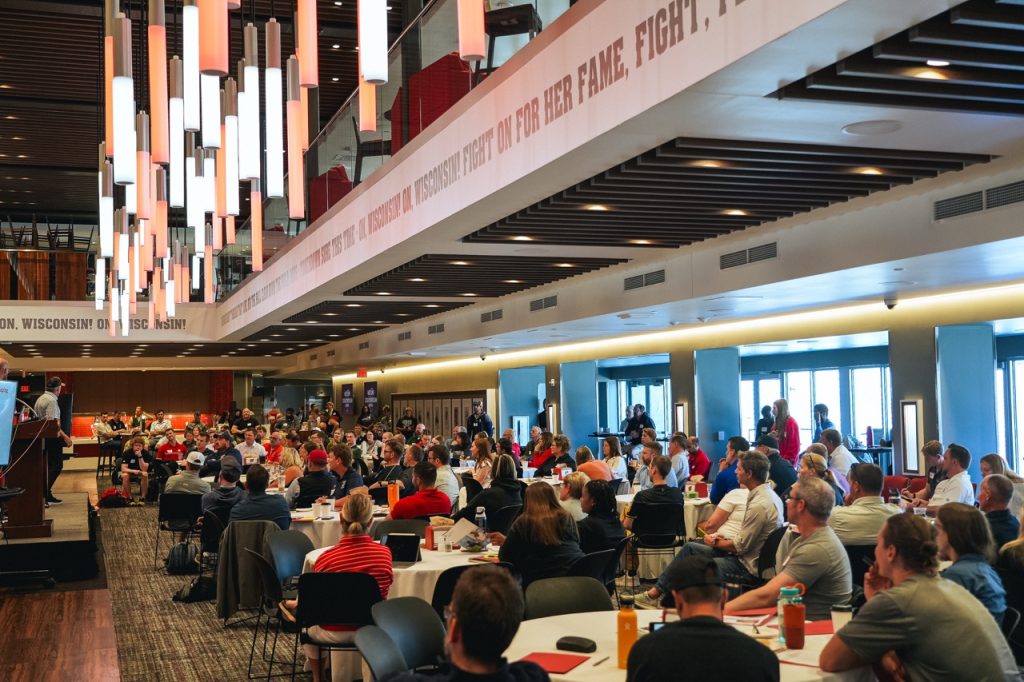
More than 200 leaders gathered on June 23 for the fifth annual BIOS Leadership and Coaching Symposium, including UW head and assistant coaches, current and former Badgers, professional athletes, UW-Madison faculty, and high school coaches and administrators from across Wisconsin. The day included keynote sessions, conversation, and a research fair. The Symposium began with two aspirations: to deepen participants’ understanding of culture-building and to strengthen commitments to Bell Cow leadership — leaders who “pace the herd and model the way.”
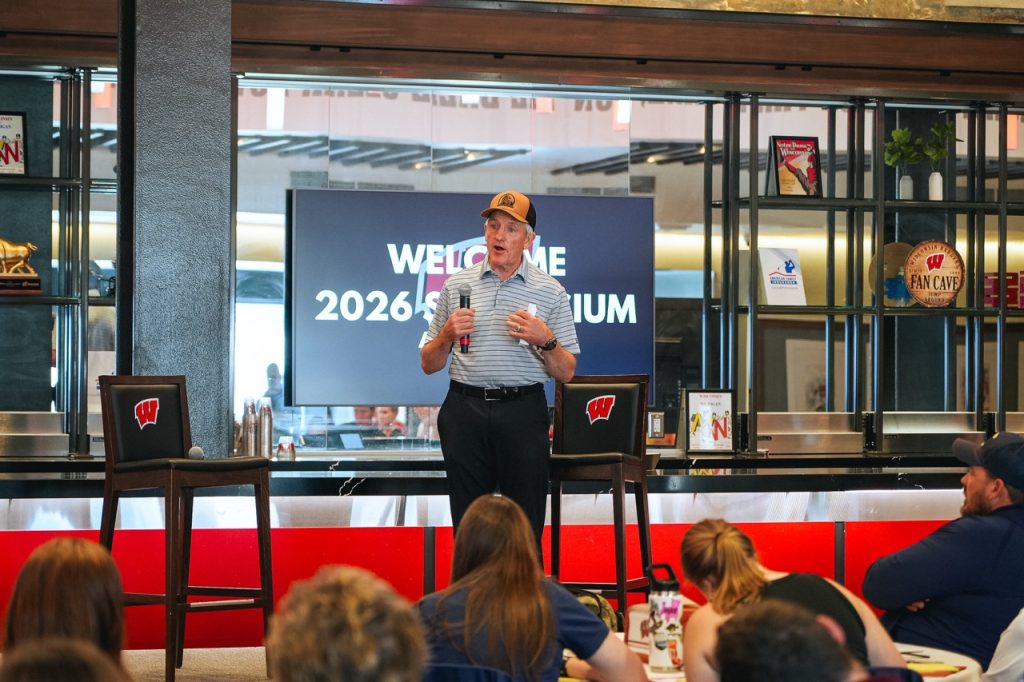
Dr. Marcus Sedberry welcomed attendees with a reflection on his own Bell Cow, his father, whose steady daily support and example carried him through both good times and difficult ones. He also described the Badger Athletics commitment to leadership development.
Session 1 | Coach Mark Johnson
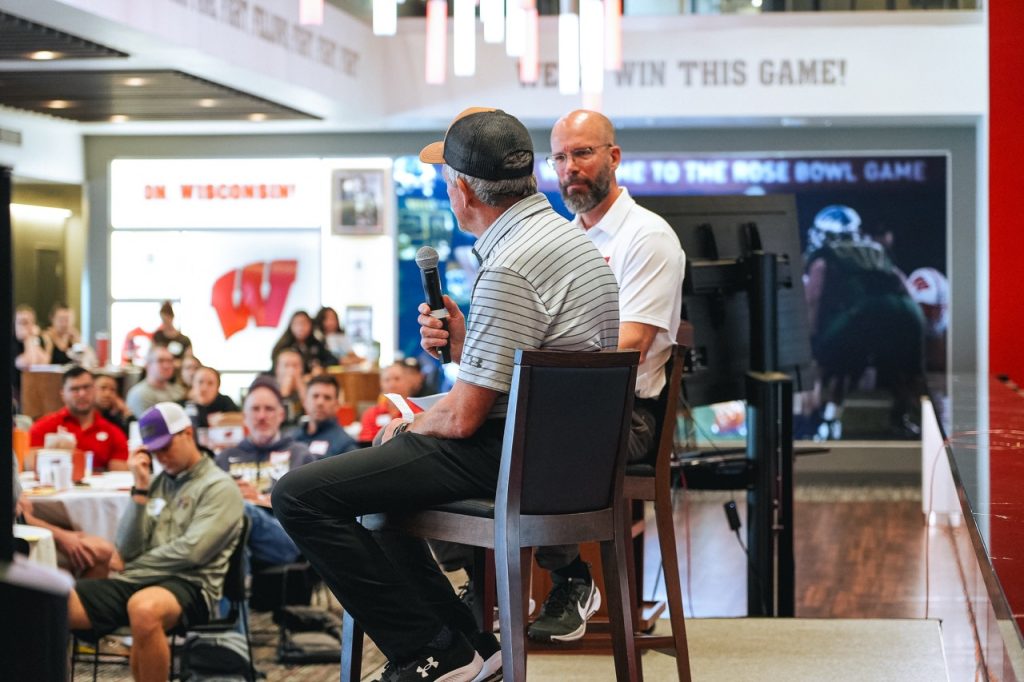
Coach Mark Johnson shared wisdom from his years leading Wisconsin Women’s Hockey, beginning with the necessity of consistency. His own steadiness, he explained, is critical to the team’s ability to navigate the inevitable ups and downs of a season.
Coach Johnson described the phases of culture development that he sees each season: forming, storming, norming, and performing. In the forming stage, there is often a honeymoon quality to the group. Players are getting to know one another, optimism is high, and the team is energized by what may lie ahead.
The next phase is storming, when friction, uncertainty, resistance, and conflict emerge. Storming often begins after the first games, when playing time and roles become more difficult for people to embrace. Coach Johnson noted that storming can last a long time for some teams. In those moments, coaches must remain anchored in their principles rather than shifting them in an effort to appease others. It is natural for people to want more, and some tension is expected. But “vampires” — those who drain the energy from a team — cannot be tolerated.
Be consistent in your principles. Storming is part of the work of culture; it is not permission to abandon what the team stands for. — Coach Mark Johnson
The third stage, norming, is when trust, habits, and roles take root. The team gains clarity about what it does together. It can be a rewarding stage for coaches, who may be able to step back and allow the group to carry more of the work. Norming creates the conditions for performing at the group’s highest level.
Coach Johnson also emphasized player leadership. He told the story of a star player who was heartbroken after not being selected for the Olympics. She faced a choice about how to respond. She chose to congratulate the teammates who made the team, thank those who supported her during a difficult period of disappointment, and recommit herself to helping the Badgers pursue an NCAA championship. Coach Johnson described her response as one of the most powerful examples of player leadership he had experienced. In the months that followed, the team won the NCAA championship.
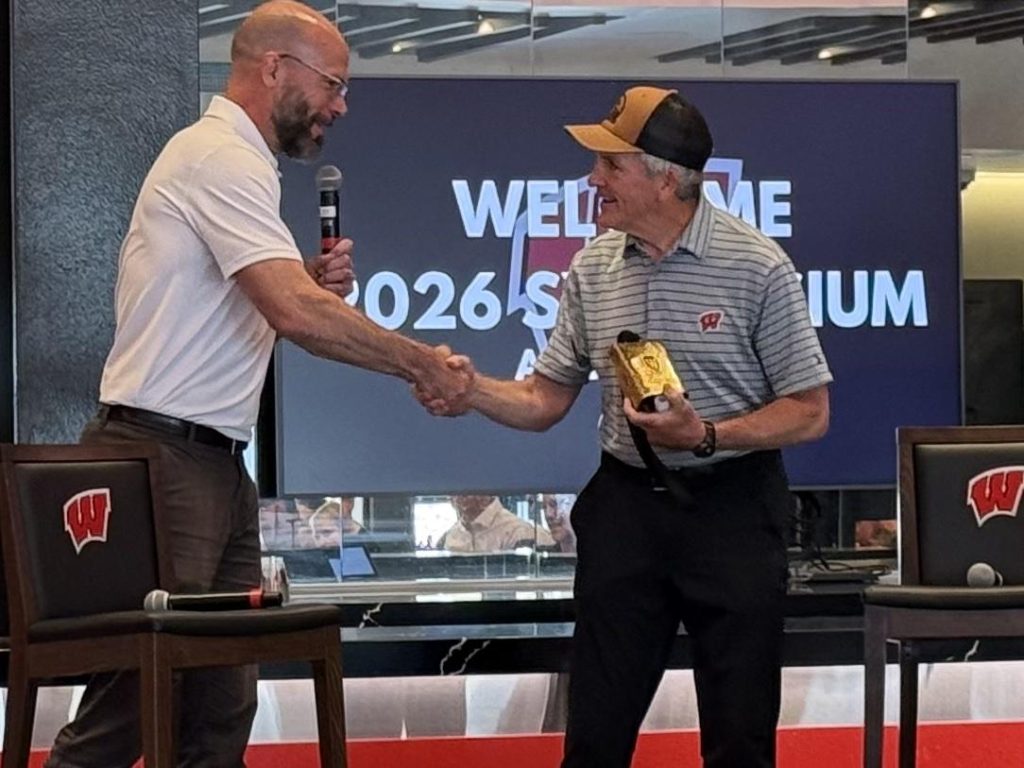
At the conclusion of his session, Coach Johnson received the Wisconsin Bell Cow Leadership Award, BIOS’s highest honor for leaders who “pace the herd and model the way.” He is the first Badger coach to receive the award.
At the conclusion of his session, Coach Johnson received the Wisconsin Bell Cow Leadership Award, BIOS’s highest honor for leaders who “pace the herd and model the way.” He is the first Badger coach to receive the award.
Session 2 | Dr. Turina Bakken and Omar Brown
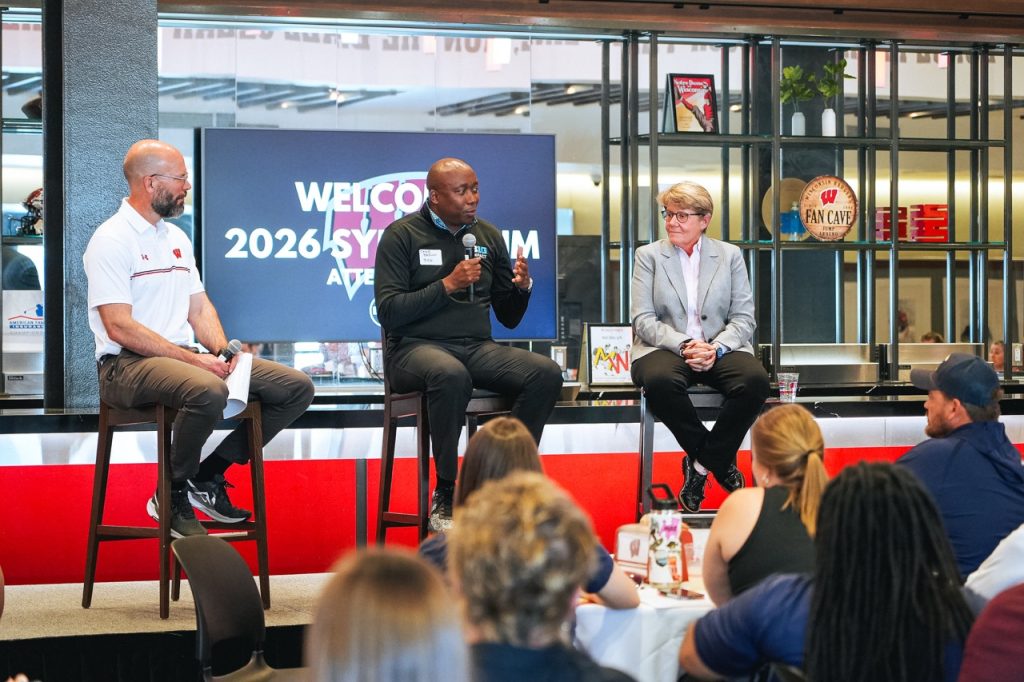
Dr. Turina Bakken shared from her years of leadership as a college executive and athlete. Her servant-leadership perspective is grounded in elevating others and creating space for them to contribute and grow. She explained that she privately maintained a “leadership draft board” that helped her identify emerging leaders within her organizations. She made efforts to get to know these promising people, offer support and guidance, give them meaningful responsibility, and look for ways to create upward opportunities in their careers.
She also reflected on conflict as an inherent part of leadership. Some of the most difficult people to work with, she suggested, can often be engaged best through relationships. She sought common ground, made the effort to know people personally, and looked for ways to build from that foundation. Turina shared a notable example of how breakfast with one of her strongest antagonists helped create a more respectful working relationship that endured for years.
Take yourself off the stage and shine the light on others. — Dr. Turina Bakken
Omar Brown focused on the power of shared experiences away from a team’s ordinary settings. He described how getting outside normal spaces and comfort zones can stimulate deeper conversations, expand consciousness, and strengthen leadership. Service opportunities, he suggested, can be especially impactful because teams contribute to the good of others while growing together.
Omar also discussed beginning with a disposition of trust. “I believe in you” is the orientation he brings to each person on his team. This posture, he explained, can instill confidence, ownership, and empowerment in individuals.
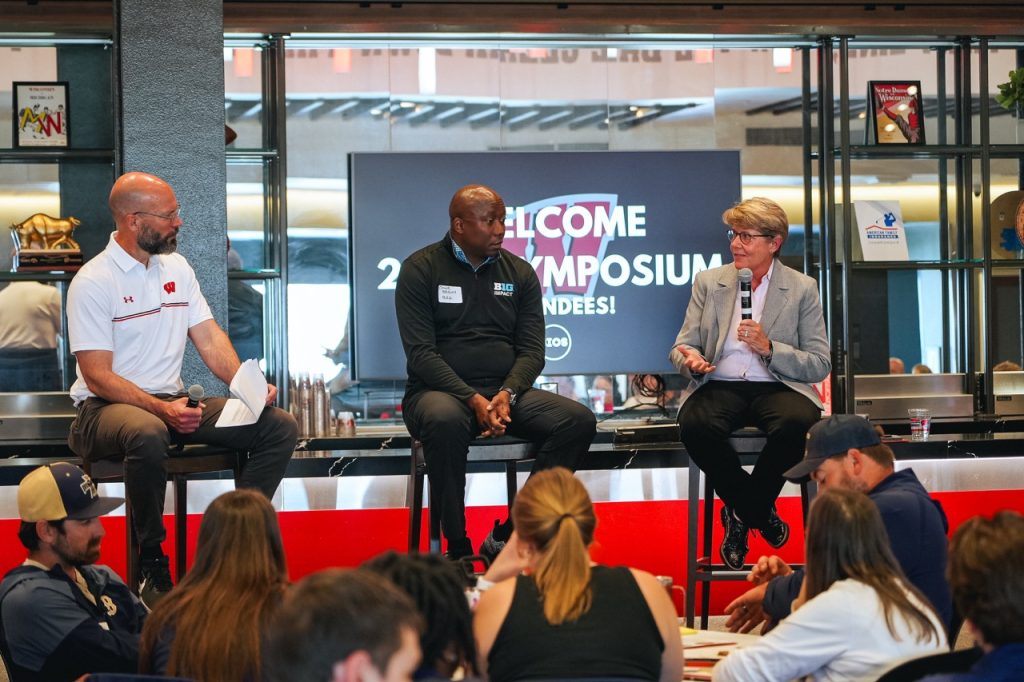
Session 3 | BIOS Research Updates
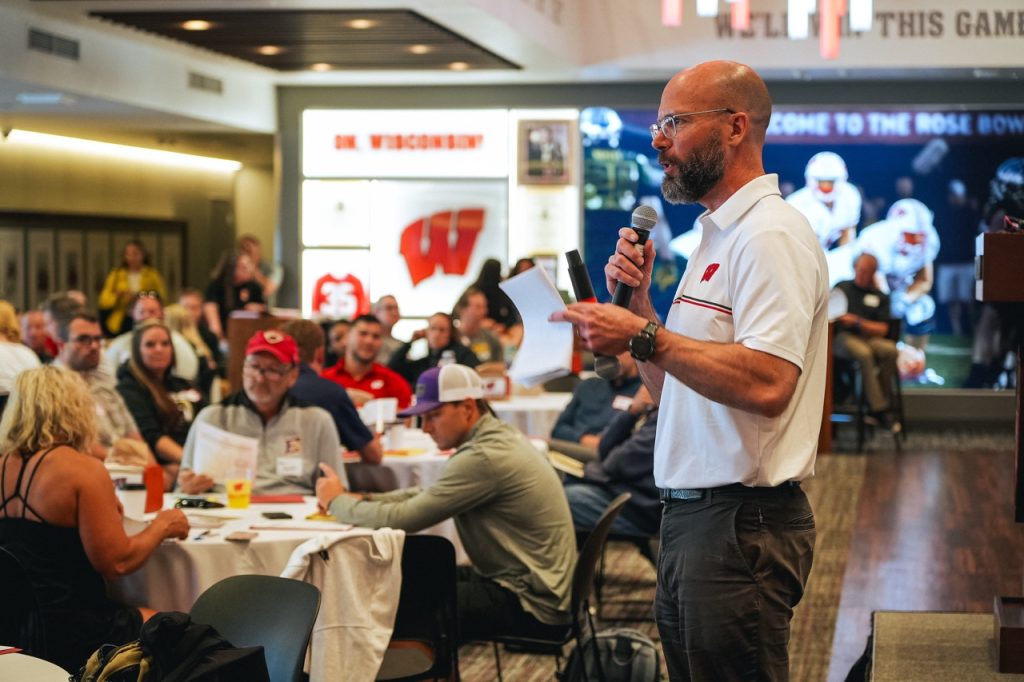
Professor Pete Miller provided an overview of recent BIOS research projects and their direct connections to Badger teams as well as high school and youth teams. He shared that BIOS engaged and supported more than 2,000 coaches, administrators, parents, and athletes across Wisconsin during 2025–26. BIOS faculty fellows and students are currently leading multiple empirical studies on topics ranging from leadership and the internationalization of college sport to brain health and AI design.
Professor Miller also shared recent Wisconsin sports-participation data, including the growth of girls’ volleyball, challenges facing girls’ basketball, and the long-term decline in football participation across the state — nearly 33 percent since 2001.
Finally, he highlighted the importance of coaches attending to both complicated and complex aspects of leadership. Complicated challenges can often be addressed through expertise, planning, problem-solving, and the right procedure. Complex challenges involve meaning, trust, identity, relationships, competing values, and culture. Coaches are called to address both kinds of work.
He left participants with three reflection questions to carry back to their programs:
“What patterns can be seen in our team’s responses to adversity, disappointment, success, or conflict?”
“If someone watched only the first 15 minutes of our practices for two weeks, what conclusions would they draw about what our program truly values?”
“How are people changing because they have been part of this team?”
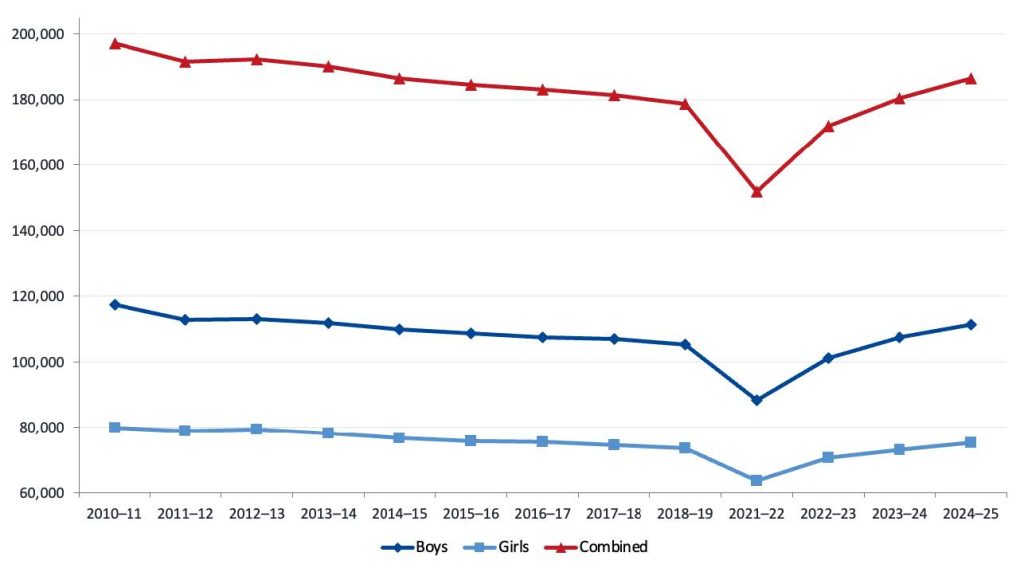
Wisconsin high school sports participation across years
Session 4 | Alec Ingold
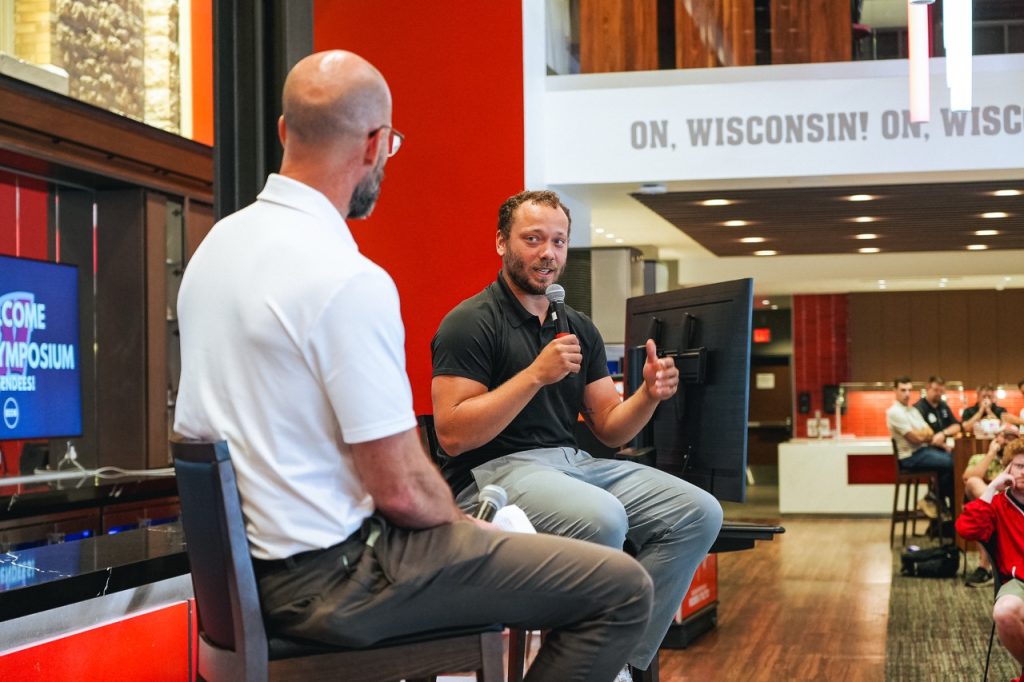
NFL player and former Badger Alec Ingold focused on player leadership. He reflected on how he began to understand himself as a leader during high school, when a coach recognized his potential to influence others and encouraged him to step into a more vocal role. Alec urged coaches to proactively identify leaders within their groups and build upon the gifts those people bring to the table.
Having served as a captain at the high school, college, and NFL levels, Alec highlighted the importance of formal leadership positions. He described the captain as a critical bridge between players and coaches. Coaches’ belief in captains, along with the routines they establish together, can become foundational elements of a unified and focused team effort.
Leadership is not limited to a title.
People can lead from the middle through everyday consistency. — Alec Ingold
Alec also stressed that leadership is not limited to holding a title. He described leading from the middle — the influence exerted by players who do not occupy formal roles but model consistency through their everyday actions. He shared the example of his current role with the Los Angeles Chargers, where he is a newcomer and not a captain. By giving purposeful attention to each interaction with teammates and approaching every day in the facility with diligence, he seeks to model the kind of leadership that strengthens team culture.
Finally, Alec emphasized the importance of vulnerability in leadership. Leaders must remain open to growth and establish diverse feedback loops. He highlighted his recent journey through the BIOS Verification process as an example of placing leadership-development ideas before outside scholars and experts in order to improve them.
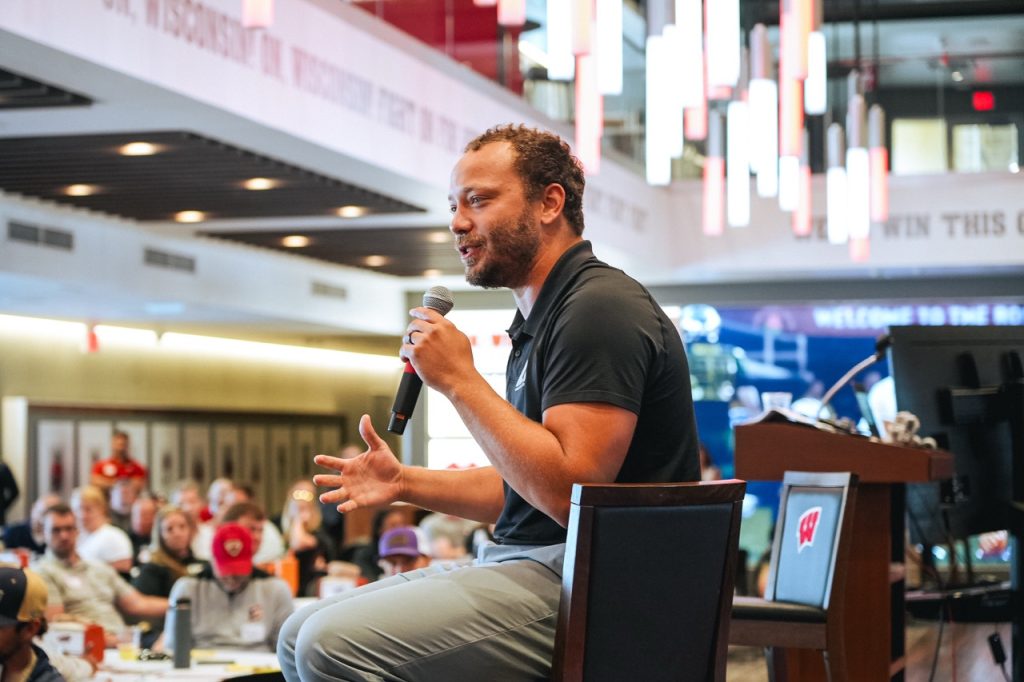
Participants concluded the day by considering what they would take forward from the Symposium: “How will these ideas affect my work in my own setting?” Professor Miller urged participants to remain engaged with BIOS in the year ahead and to “be Bell Cows who are worthy of being followed.”
We are so grateful to everyone who joined us for this milestone fifth annual event. We can’t wait to see you in 2027.